
Skip to content
PDF

PDF

Free PDF Source

  • Home
PDF

PDF

Free PDF Source

  • Sample Page

Leader Election Algorithm In Distributed Systems – Bully Election Leader Algorithm

  • Home
  • Distributed Computing
  • Leader Election Algorithm In Distributed Systems – Bully Election Leader Algorithm
Leader Election Algorithm In Distributed Systems - Bully Election

Leader Election Algorithm In Distributed Systems – Bully Election Leader Algorithm.

Leader Election Algorithm In Distributed Systems Bully Election Leader Algorithm Distributed Computing Bully Algorithm Election Algorithm And Distributed Processing. Leader Election Algorithms in Distributed Systems Election Algorithm in Distributed System Bully Leader Election Algorithm Enhanced Bully Algorithm for Leader Node Election.

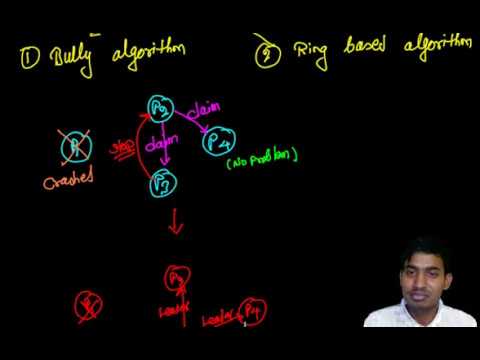
[fvplayer id=”78″]

Bully Election Algorithm in Distributed Systems

The Bully Election Algorithm is a leader election algorithm used in distributed systems where multiple processes (nodes) need to agree on a single process as their leader. This algorithm is designed for synchronous systems where processes can communicate with each other reliably.

 How Bully Election Algorithm Works

The Bully Algorithm operates under the assumption that:

  • Each process in the system has a unique ID.
  • Processes communicate using message passing.
  • Any process can initiate an election if it detects that the current leader has failed.
  • The process with the highest ID becomes the leader.

 Steps of the Bully Algorithm

  1. Election Triggering:

    • If a process detects that the leader has failed (no response), it starts an election.
    • The process sends “Election” messages to all processes with higher IDs.
  2. Responses from Higher Processes:

    • If a higher-ID process is alive, it replies with an “OK” message, indicating it is still active.
    • The initiator stops its election, as a higher process will handle the election.
  3. If No Response:

    • If no higher-ID processes respond, the initiator declares itself as the leader.
    • It sends a “Coordinator” message to all lower-ID processes, informing them of its leadership.
  4. Election by Higher Process:

    • If a higher-ID process is available, it initiates its own election, following the same steps.
    • This continues until the highest-ID process becomes the leader.

 Example Scenario

Assume we have 5 processes in a distributed system with IDs:
P1, P2, P3, P4, P5 (P5 has the highest ID).

  1. P3 detects the leader (P5) has failed.
  2. P3 starts an election and sends an “Election” message to P4 and P5.
  3. P5 is down, but P4 replies with an “OK” message.
  4. P4 starts its own election, sending an “Election” message to P5.
  5. P5 is down, so P4 declares itself as the new leader.
  6. P4 sends a “Coordinator” message to P1, P2, and P3, informing them.

 Advantages of the Bully Algorithm

Ensures the highest-ID process becomes the leader.
Works efficiently in failure-prone environments.
Simple to implement in synchronous systems.

 Disadvantages

High message overhead (many messages exchanged).
Can cause network congestion in large systems.
Not suitable for asynchronous systems (timeouts may cause false election triggers).

 Code Implementation in Python

Here’s a simple implementation of the Bully Algorithm in Python:

class Process:
def __init__(self, id, processes):
self.id = id
self.processes = processes
self.leader = None
def start_election(self):
print(f”Process {self.id} started an election.”)
higher_processes = [p for p in self.processes if p.id > self.id]if not higher_processes:
self.become_leader()
else:
for p in higher_processes:
p.receive_election(self)def receive_election(self, initiator):
print(f”Process {self.id} received an election message from {initiator.id}. Sending OK.”)
initiator.receive_ok()
self.start_election()

def receive_ok(self):
pass # This process will wait for another leader announcement

def become_leader(self):
print(f”Process {self.id} becomes the leader.”)
for p in self.processes:
p.leader = self
self.announce_leader()

def announce_leader(self):
for p in self.processes:
print(f”Process {p.id} acknowledges {self.id} as the leader.”)

# Example execution
p1 = Process(1, [])
p2 = Process(2, [])
p3 = Process(3, [])
p4 = Process(4, [])
p5 = Process(5, []) # Highest ID, should become leader

all_processes = [p1, p2, p3, p4, p5]
for p in all_processes:
p.processes = all_processes # Assign all processes to each one

p3.start_election() # Trigger election from Process 3

 Conclusion

The Bully Election Algorithm is widely used in distributed computing to ensure there is a single leader in a system. However, due to its high message complexity, alternatives like the Ring Election Algorithm or Paxos are sometimes preferred in large-scale systems.

Would you like an explanation of an alternative leader election algorithm?

Leader Election Algorithm In Distributed Systems – Bully Election Leader Algorithm

Lecture 14: March 21 14.1 Overview 14.2 Leader Election

Lecture 2: Leader election algorithms.

The Bully Algorithm is a classic leader election algorithm used in distributed systems where nodes (processes) need to elect a coordinator (leader). It is especially useful in synchronous systems where all nodes know each other’s process IDs (or priorities).


💡 Why Use Leader Election?

In distributed systems, one node often acts as the coordinator to manage shared resources or control system-wide decisions. When the coordinator fails, the system must elect a new leader.


👑 Bully Algorithm Overview

  • Each process has a unique ID (PID).

  • The process with the highest PID becomes the coordinator.

  • Any process can initiate the election if it detects that the coordinator is not responding.


🧠 Assumptions

  1. All processes know the PIDs of other processes.

  2. PIDs are unique and comparable.

  3. A failed process may restart and rejoin the system.

  4. Reliable communication (message delivery is guaranteed).


🔄 Steps of the Bully Algorithm

Step 1: Election Trigger

If a process notices the coordinator has failed, it initiates an election by sending an ELECTION message to all processes with higher PIDs.

Step 2: Responses from Higher Processes

  • If no higher process responds, the initiator becomes the coordinator and sends a COORDINATOR message to all.

  • If one or more higher processes respond with OK, they take over and start their own elections.

Step 3: Final Outcome

Eventually, the process with the highest PID wins and sends a COORDINATOR message to all processes.


🔁 Message Types

Message Meaning
ELECTION Sent to higher PID processes
OK Acknowledge, “I’m alive and will elect”
COORDINATOR Announcement of new leader

🧩 Example

Let’s say we have 5 processes:

scss
P1 (ID=1), P2 (ID=2), P3 (ID=3), P4 (ID=4), P5 (ID=5)
  • If P3 detects P5 (the current leader) has crashed:

    • P3 sends ELECTION to P4 and P5.

    • P4 responds with OK and initiates its own election.

    • P4 sends ELECTION to P5 (no response), becomes the new coordinator.

    • P4 sends COORDINATOR to all.


⚖️ Pros and Cons

✅ Advantages:

  • Simple to implement.

  • Guarantees that the highest-ID active process is the leader.

❌ Disadvantages:

  • Generates a lot of messages, especially if many nodes are alive.

  • Not ideal for large or asynchronous systems.


🧑‍💻 Pseudocode (Simplified)

python
def start_election():
for pid in higher_processes:
send(pid, "ELECTION")
if not receive_OK():
broadcast(“COORDINATOR”, self_id)
else:
wait_for_coordinator()

🔄 Variants

  • Ring Algorithm (less message overhead in large systems)

  • Chang and Roberts Algorithm (improvement on ring-based election)


Would you like:

  • A flowchart of the Bully Algorithm?

  • Sample code implementation in Python?

  • Animation or simulation of how it works?

Let me know how you’d like to learn it further.

Leader Election Algorithm In Distributed Systems – Bully Election Leader Algorithm

Leader Election Algorithms in Distributed Systems

Leader Election Algorithm In Distributed Systems – Bully Election Leader Algorithm
By latestpdfPosted on June 6, 2025Posted in Distributed ComputingTagged Bully Election Leader Algorithm, Bully Leader Election Algorithm, Distributed Computing bully algorithm, Election Algorithm and distributed processing, Election algorithm in distributed system, Enhanced Bully Algorithm for Leader Node Election, Leader Election Algorithm In Distributed Systems, Leader Election Algorithms in Distributed Systems

Post navigation

what is SEO ( Complete introduction helpful for clearing basic understanding of ranking Post on Google Bing)
Option Strategy with live account – Bear put spread.

Leave a Reply Cancel reply

You must be logged in to post a comment.

Recent Posts

  • Marketing Automation and Your Account-Based Marketing Strategy
  • How To Start A Podcast: A Complete Step-By-Step Tutorial
  • Important Tips For Managing The Business Efficiently
  • Google Cloud Provides Transforming Solutions For Businesses And Industries
  • The Amazing Ai And Machine Learning Techniques Creates The Possibility Of Language And Its Conversation

Categories

  • 3d Game Design
  • Ace Academy Notes PDF For Gate
  • Advance Engineering Mathematics
  • AIIMSNEET
  • Algorithm Analysis and Design
  • ALGORITHM ANALYSIS AND DESIGN PDF
  • Alka Guess Paper PDF
  • Alka Super Guess Paper 12 Bihar Board
  • Allen Career Institute Kota Biology Module
  • Allen Career Institute Kota Physics Module
  • Allen Career Institute Physics Race
  • Allen Chemistry Pdf
  • Allen Kota RACE Physics Pdf
  • Allen Physics Module Solution Part-1
  • Allen Physics Module Solution Part-2
  • Allen physics module solutions pdf
  • Allen Physics Pdf
  • Allen Test Series-2
  • Allen Test Series1
  • Animation
  • Artificial Intelligence
  • Audio editing
  • Automation
  • B. tech and Gate Computer Science Notes/TOC.pdf
  • BA Economics Honors Book PDF
  • BA History Book PDF
  • BA Political Science Book PDF Download
  • backlink checker
  • Basant Hindi Class 7.pdf
  • BCA Computer Book PDF
  • Bihar Board English class 12
  • Biology Class 12 Notes Pdf Download
  • Biology Definition
  • Biotechnology
  • Business
  • BUSINESS MANAGEMENT
  • c notes
  • C Programming
  • C PROGRAMMING PDF
  • Calculus With Analytic Geometry Book PDF
  • Career Point Chemistry Pdf
  • Career Point IIT JEE Physics
  • Career Point Kota AIEEE Physics
  • Career Point Lecture Content Index
  • Career Point Math Pdf
  • Career Point Module Surface Chemistry
  • Career Point Physics
  • Career Point Physics Module
  • CAREER POINT VIDEO LECTURE
  • Chemistry Basic Inorganic Nomeclature
  • Chemistry Class 12 Notes
  • Chemistry Electric Field Notes
  • Chemistry Metallurgy
  • Chemistry Notes
  • Chemistry Notes Class 12 Pdf
  • Chemistry Notes P Block.pdf
  • Chemistry Practical 12
  • CHEMISTRY PRACTICAL CLASS 12 PDF
  • Chemistry Qualitive Analysis
  • Class 10 Chemistry
  • Class 10 Physics
  • class 11 and 12 biology
  • class 11 and 12 physical chemistry
  • Class 11 Machanics Notes PDF.pdf
  • Class 11 Math Log Modulus Basic Math Integeration.pdf
  • Class 12 biology notes
  • Class 12 notes
  • Class 12 Physics
  • Company
  • Compiler Design
  • COMPILER DESIGN PDF
  • Computer Network
  • COMPUTER NETWORK PDF
  • COMPUTER ORGANIZATION AND ARCHITECTURE PDF
  • Computer Science
  • Computer Science Notes /English.pdf
  • Computer Science Notes PDF/Computer Organisation.pdf
  • Computer Science Notes PDF/Digital Electronics.pdf
  • Computer Science Notes PDF/DSA.pdf
  • Computer Science Notes PDF/General Aptitude.pdf
  • Computer Science Notes PDF/RDBMS.pdf
  • Computer Science Notes/MicroProcessors.pdf
  • Coordination Compounds
  • Data Structure
  • Data Structure And Algorithm.pdf
  • DATA STRUCTURE PDF
  • Database
  • DATABASE AND MANAGEMENT SYSTEM DBMS PDF
  • design and analysis of algorithms pdf
  • Dev vani Sanskritm Class 4.pdf
  • Devani Sanskritm Class – 3
  • Digital Electronics
  • DIGITAL ELECTRONICS PDF
  • Dinesh Objective Biology Pdf
  • Dinesh Objective Chemistry For Neet/Jee Pdf
  • Dinkar D. Jha Book PDF
  • Dinsh Objective Physics
  • Discrete mathematics
  • DISCRETE MATHEMATICS PDF
  • Discrete Mathematics.pdf
  • Distributed Computing
  • Distributed Computing
  • email marketing
  • Engineering Mathematics
  • ENGINEERING MATHEMATICS PDF
  • English Bihar Board Pdf
  • English Grammar
  • English Notes
  • Evergreen English Class 12 Pdf
  • Finance
  • Fundamental of Grammar & RC Book PDF Download
  • GATE Computer Science Notes
  • Gate Computer Science Notes /Network Security.pdf
  • Gate Computer Science Notes /TOC Complete.pdf
  • Gate Computer Science Notes PDF
  • GATE POSTAL BOOK PDF
  • General
  • General Aptitude
  • GENERAL APTITUDE PDF
  • General English
  • GENERAL ENGLISH PDF
  • GENETIC ENGINEERING
  • GK Tricks
  • HIGHEST CPC KEYWORDS
  • Hindi Project CBSE Class 12
  • HINDUSTANI MUSIC
  • Hindustani Music Pdf
  • History
  • IAS
  • IAS NOTES
  • ICICI direct Mobile Apps
  • ICICI DIRECT TRADER RACER Video
  • ICICIDirect Desktop Trading
  • ICICIDirect Tutorial
  • IIT JEE Inorganic Chemistry
  • IIT NEET
  • IIT NEET/Biology
  • IIT NEET/Chemistry
  • IIT NEET/English
  • Industrial Training
  • Inspiring Story
  • Internet and Web Technology
  • Java And Oracle
  • Kids Alphabet Learning
  • landing page
  • Let Us C
  • Light Wave Optics Nuclei Semiconductor Electromagnetic
  • made easy notes
  • Mantra Rahasya Book PDF
  • MANUFACTURING PROCESS
  • Market
  • Marketing
  • Math Class 12 Notes
  • Math Notes Progression Pdf Download
  • Mathematics 12 Notes Part 1
  • Mathematics 12 Notes Part2
  • Mathematics 12 Notes Part3
  • Mathematics 12 Notes Part4
  • Mathematics Project CBSE Class 12
  • Mathematics Quantitative Aptitude Books PDF
  • Mathematics Short Tricks
  • Maths Reasoning
  • Media net Review
  • modern abc physics class 12 pdf download
  • modern abc physics practical class 12 pdf
  • Modern's ABC of Practical Chemistry Class 12
  • Motivational
  • NCERT BOOK NOTES PDF
  • ND Study Material Physics Class 12
  • Non Verbal Reasoning
  • Non Verbal Reasoning by Dr. R S Aggarwal
  • Nuclear physics Notes For Class 11 Pdf Download
  • Numerical Methods
  • ONLINE BUSINESS TOOL
  • Operating System
  • OPERATING SYSTEM PDF
  • Organic Chemistry Notes
  • Organic Chemistry Notes.pdf
  • OXFORD CURRENT ENGLISH GRAMMAR PDF
  • OXFORD CURRENT ENGLISH TRANSLATION PDF
  • OXFORD ENGLISH DICTIONARY
  • OXFORD JUNIOR ENGLISH GRAMMAR PDF
  • Oxford Junior English Translation Book PDF
  • OXFORD JUNIOR ENGLISH TRANSLATION PDF
  • Permutation and Combination Trigonometry Triangle Circle Mathematical Induction
  • Physical Chemistry
  • Physical Chemistry Notes
  • Physics
  • Physics 12 Notes Unit & Dimension
  • Physics Class 12 Notes
  • Physics For you PDF
  • Physics Notes Class 11 Pdf Download
  • Physics Notes Class 12.pdf
  • Physics Notes Law of Motion Pdf Download
  • physics Notes Optics
  • Physics Notes Photo Electric Effect.pdf
  • Physics Notes Rotation Motion Pdf Download
  • Physics Practical Class-12 Pdf
  • Physics Rotational Mechanics Notes Pdf Download
  • Physics Unit and Dimension Gravitation
  • politics
  • Practical File Sanskrit Class 12
  • Pradeep Chemistry Class 12
  • Pradeep Fundamental Physics Class 12
  • Previous Year Solved Papers BCECE Bihar
  • Privacy and Cyber Security
  • Product & Services
  • Project on English CBSE Class 12
  • PSU
  • Quantitative Aptitude Maths Tricks
  • R S Agarwal Mathematics For Class 12
  • Rapidex Computer Course Book PDF
  • Rapidex English Epeaking Course VIDEO
  • RAPIDEX ENGLISH SPEAKING COURSE
  • RAPIDEX ENGLISH SPEAKING COURSE IN HINDI
  • Rapidex English Speaking Course in Hindi PDF
  • Rapidex English speaking Course Pdf
  • RAPIDEX ENGLISH SPEAKING COURSE PDF DOWNLOAD
  • RAPIDEX ENGLISH VOCABULARY
  • rdbms notes
  • Resonance Chemical Bonding Pdf
  • Resonance Chemical Equilibrium Pdf
  • Resonance Chemistry Basic Inorganic Nomenclature
  • Resonance Chemistry Biomolecules & Polymers
  • Resonance Chemistry Chemical Bonding
  • Resonance Chemistry Chemical Equilibrium
  • Resonance Chemistry Chemical Kinetics
  • Resonance Chemistry ElectroChemistry
  • Resonance Chemistry Equivalent Concept & Titration
  • Resonance Chemistry Equivalent Concept & Titrations
  • Resonance Chemistry General Organic Chemistry
  • Resonance Chemistry Halogen & Nobel Gas
  • Resonance Chemistry Hydrocarbons
  • Resonance Chemistry Ionic Equilibrium
  • Resonance Chemistry Matallergy
  • Resonance Chemistry Module PDF
  • Resonance Chemistry Mole Concept
  • Resonance Chemistry Organic Chemistry
  • Resonance Chemistry Qualitative Analysis
  • Resonance Chemistry Reaction Mechanism
  • Resonance Chemistry Study Material Book PDF
  • Resonance Math Module PDF
  • Resonance Physics Module PDF
  • Ruchira Sanskrit Class 7.pdf
  • Ruchira Sanskrit NCERT Class 8
  • SALES AND MARKETING
  • Sanskrit Grammar
  • Science
  • SEO
  • Shakespeare Book PDF
  • Software
  • Software Engineering
  • Solution of Concept of Physics Hc Verma
  • songs
  • Spectrum UPSC Book PDF
  • Spoken English
  • Spoken English/Vocabulary
  • SSB1
  • SSB2
  • Startup Businesses
  • StartUp Ideas
  • STOCK MARKET
  • System Analysis and Design
  • System Programming
  • Technology
  • Testing
  • Theory of Computation
  • THEORY OF COMPUTATION PDF
  • Topper Strategy
  • Toppers Tricks
  • Uncategorized
  • Uphar Language of Chemistry Book PDF
  • UPSC
  • VEDIC MATHS BOOK VIDEO LECTURE
  • Verbal deduction by R S Aggarwal
  • Verbal Reasoning
  • Verbal Reasoning by Dr. R S Aggarwal
  • Video Creation
  • Video Lecture
  • WEBSITE AND SERVICE
  • Wireless and Mobile Communication
  • WordPress
  • Xam Idea Class 10 Sanskrit
  • Xam idea PDF

Copyright © 2026 PDF. All Rights Reserved.

Scroll to top