
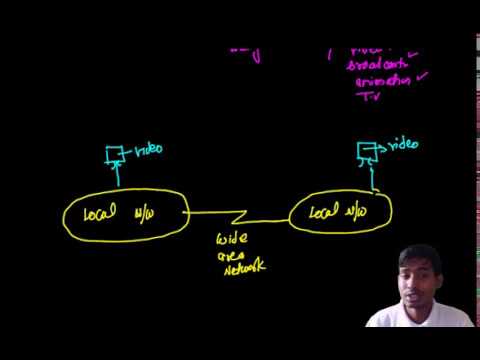
Distributed Multimedia System Design-Classification and Architecture.
[fvplayer id=”64″]
Here’s a comprehensive explanation on Distributed Multimedia System Design, including its classification and architecture — suitable for students, technical readers, or anyone studying computer networks or distributed systems.
🎥💻 Distributed Multimedia System Design: Classification and Architecture
✅ What is a Distributed Multimedia System?
A Distributed Multimedia System (DMS) is a system that supports the generation, storage, transmission, and presentation of multimedia content (like audio, video, animation, images) over distributed computing environments such as networks or the internet.
Key goal: Deliver rich media content efficiently, reliably, and in real-time to users located across different networked systems.
🔀 Classification of Distributed Multimedia Systems
Distributed multimedia systems can be classified based on functionality, application, and media type:
1. 🧠 Based on Functionality
-
Multimedia Data Servers: Handle storage and delivery of large media files.
-
Media Processing Systems: Perform encoding, decoding, compression.
-
Multimedia Communication Systems: Responsible for streaming and networking.
-
Multimedia Presentation Systems: Manage synchronized playback of content.
2. 🖥️ Based on Application Area
-
Video Conferencing Systems
-
Streaming Media Services (e.g., Netflix, YouTube)
-
Virtual Reality / Augmented Reality
-
Online Education Platforms
-
Telemedicine & Remote Diagnostics
3. 🎵 Based on Media Type
-
Audio Systems
-
Video Systems
-
Text/Graphics Systems
-
Animation/3D Systems
🏗️ Architecture of Distributed Multimedia Systems
A typical DMS architecture is composed of multiple layers or components, each handling specific tasks:
🌐 1. Network Layer
-
Ensures reliable and fast data transmission (TCP/UDP, IP).
-
Handles QoS (Quality of Service) requirements: bandwidth, delay, jitter.
💽 2. Storage Layer
-
Supports large multimedia data storage (audio, video, images).
-
Uses media servers, distributed file systems, or cloud storage.
-
Supports caching, replication for performance.
📦 3. Middleware Layer
-
Acts as the glue between applications and the network/hardware.
-
Provides media synchronization, session management, and stream control.
-
Uses standards like CORBA, DCOM, or modern REST APIs.
🎥 4. Application Layer
-
Interfaces directly with users (media players, conferencing apps).
-
Manages user interactions, media presentation, and UI/UX.
-
Ensures synchronization between audio/video streams.
🔁 5. Synchronization & QoS Management
-
Crucial for real-time multimedia like video calls or live streaming.
-
Maintains temporal consistency (e.g., audio matches video timing).
-
Adapts to network congestion, latency issues.
📌 Key Challenges in DMS Design
-
Network latency and jitter
-
Synchronization of media streams
-
Scalability and fault tolerance
-
Data compression and decompression
-
Real-time delivery with QoS guarantees
🔧 Example Use Cases
-
Zoom, Microsoft Teams (real-time distributed conferencing)
-
Netflix, YouTube (media streaming)
-
Metaverse/VR platforms (high-bandwidth immersive systems)
🧠 Conclusion:
Distributed Multimedia Systems are the backbone of modern media services. Their design involves balancing performance, quality, and real-time delivery across diverse and scalable platforms.
Would you like this content as:
-
A PowerPoint presentation
-
A PDF for study
-
Simplified Hindi version
Let me know how you’d like to use it, and I’ll format it accordingly!