
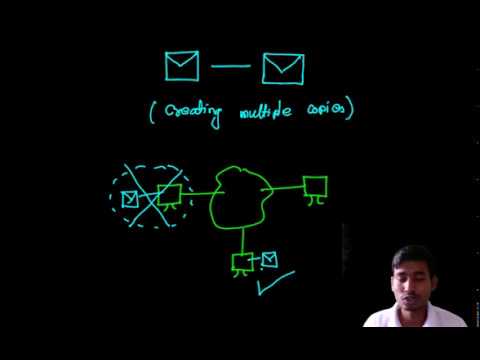
Replication techniques and its Types in Distributed Computing.
[fvplayer id=”60″]
Replication Techniques and Its Types in Distributed Computing
Replication in distributed computing refers to the process of creating and maintaining multiple copies of data or services across different nodes in a network. The primary goals of replication are fault tolerance, high availability, performance improvement, and load balancing.
1. Why is Replication Needed?
Fault Tolerance – Ensures system availability even if some nodes fail.
High Availability – Users can access data even if some replicas go down.
Load Balancing – Distributes requests across replicas to avoid bottlenecks.
Performance Improvement – Reduces latency by placing replicas closer to users.
Data Consistency – Ensures all nodes have the same updated data.
2. Types of Replication Techniques
A. Data Replication (Used in Databases & Storage Systems)
-
Synchronous Replication
- All copies are updated immediately before the transaction is committed.
- Ensures strong consistency but has high latency.
- Example: Banking transactions, financial systems.
-
Asynchronous Replication
- Changes are first made to one replica and then propagated to others later.
- Faster but may lead to temporary inconsistencies.
- Example: Cloud storage (Google Drive, Dropbox).
-
Semi-Synchronous Replication
- A middle ground where some replicas confirm updates before committing, but not all.
- Balances between consistency and speed.
B. Computation Replication (Used in Distributed Computing & Cloud Services)
-
Active Replication
- All replicas execute the same request in parallel.
- Ensures consistency but requires more resources.
- Used in fault-tolerant systems (e.g., flight control software).
-
Passive Replication (Primary-Backup Model)
- A primary node processes requests and updates secondary nodes.
- If the primary node fails, a backup takes over.
- Used in high-availability services like databases.
C. Hybrid Replication
- A combination of active and passive replication to balance performance and reliability.
- Example: Cloud-based distributed databases like Google Spanner.
3. Challenges in Replication
Consistency Issues – Ensuring all copies have the same data.
Network Latency – Syncing replicas across long distances takes time.
Conflict Resolution – Handling simultaneous updates from different nodes.
Storage Overhead – Keeping multiple copies requires extra space.
Would you like a more detailed explanation of any specific replication type?
Here’s a complete and easy-to-understand explanation of Replication Techniques and their Types in Distributed Computing, ideal for students preparing for exams like GATE, or anyone learning distributed systems.
🔁 What is Replication in Distributed Computing?
Replication refers to the process of maintaining multiple copies (replicas) of data or services across different nodes in a distributed system to ensure:
-
✅ High Availability
-
✅ Fault Tolerance
-
✅ Load Balancing
-
✅ Improved Performance
🔍 Why Replication is Important?
-
If one server fails, another replica can serve the request (fault tolerance).
-
It reduces latency by serving users from the nearest replica.
-
Enhances system reliability and scalability.
🧩 Types of Replication Techniques
1. Data Replication
Maintaining copies of data (files, database records) across multiple machines.
Types:
-
Full Replication: Entire dataset is replicated to all nodes
👉 High availability, but high storage cost. -
Partial Replication: Only selected data is replicated
👉 More efficient, but less redundant.
2. Synchronous vs Asynchronous Replication
🟩 Synchronous Replication
-
All replicas must be updated before the operation is considered complete.
-
Ensures strong consistency.
-
Slower due to network delays.
✅ Used in financial systems, where accuracy is critical.
🟨 Asynchronous Replication
-
Updates are sent to replicas after the operation completes at the primary.
-
Faster, but may cause temporary inconsistencies.
✅ Suitable for content delivery networks (CDNs) or backups.
3. Primary-Backup (Master-Slave) Replication
-
One node is the primary/master, others are backups/slaves.
-
All writes go to the master, which then replicates to the slaves.
-
Simple, but single point of failure unless failover is implemented.
4. Multi-Master Replication
-
Multiple nodes can accept read/write operations.
-
Conflict resolution mechanisms are needed.
-
More complex, but highly available and scalable.
✅ Used in collaborative apps, CRDTs, or eventually consistent databases.
5. State Machine Replication (SMR)
-
A system runs a replicated state machine across multiple nodes.
-
All replicas process the same sequence of inputs.
-
Requires consensus algorithms like Paxos or Raft.
✅ Used in distributed databases, blockchains, and fault-tolerant systems.
6. Quorum-Based Replication
-
A write or read must be acknowledged by a majority (quorum) of replicas.
-
Ensures consistency without needing to contact all replicas.
-
Balances performance and reliability.
✅ Used in Amazon DynamoDB, Cassandra, etc.
🧠 Summary Table
| Replication Type | Description | Best Use Case |
|---|---|---|
| Full Replication | All data on all nodes | High availability, low-latency reads |
| Partial Replication | Only part of data is replicated | Saves space, custom distribution |
| Synchronous | Updates all replicas before completion | Strong consistency needed |
| Asynchronous | Updates replicas after completion | Performance-sensitive systems |
| Primary-Backup | One master handles writes | Simple fault-tolerant setup |
| Multi-Master | All nodes accept writes | High scalability |
| State Machine Replication | Identical replicas process same input log | High-reliability systems |
| Quorum-Based | Majority agreement ensures consistency | Scalable and resilient databases |
📘 Bonus: Real-World Examples
| System | Replication Used |
|---|---|
| Google Spanner | Synchronous + SMR (Paxos) |
| MongoDB | Primary-Backup (Replica Sets) |
| Cassandra | Quorum-Based + Eventually Consistent |
| Git | Full replication (DVCS) |
Would you like:
-
A visual diagram or chart of these types?
-
A comparison with consistency models?
-
A short quiz to test understanding?
Let me know!