
Shopping Help

List of Only Best product

Shopping Help

List of Only Best product

An Ultimate Guide For Productive Office Lighting

The chosen lighting should neither be too dull/dark nor it should be too harsh, that is why a balance needs to be maintained. It is often recommended that office lighting be synchronized with outdoor lighting as much as possible. Also, depending on the layout of the office space, different types of lights may be required, e.g. ceiling lights, floor lamps, wall lights, etc.

What Lights Should Be Used In An Office?

To improve the productivity level of employees in an office, make sure that proper lighting is there at your workstation without worrying about their eyes health. Here are the three types of lights that you can consider for your office lighting:

1. Reading Lights

In an office, flexible wall-mounted reading lights will help you to read documents and work on a laptop with proper light. It is always an advantage to have a reading light. You can use it whenever you want, and it will install beside your chair, so you don’t need to get up, again and again, to turn it on and off. They also add style and elegance to your office. It can be mounted at any cabin or workstation to feel a premium working environment.

2. Panel Lights

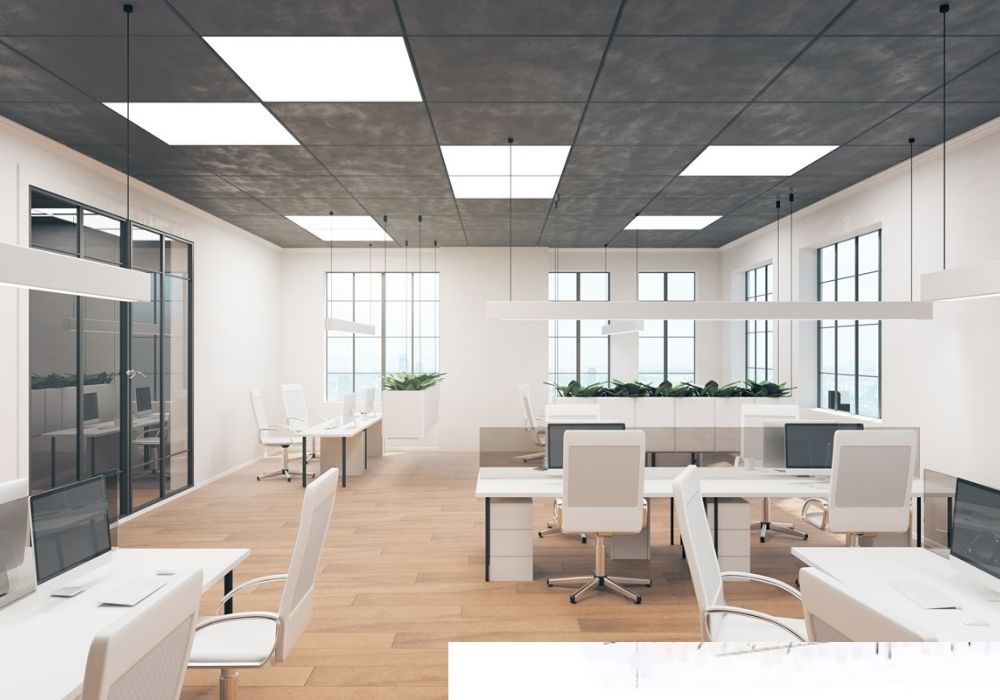
If you want to provide even lighting in your room without using large fixtures that make a big design statement, consider panel lights. These lights feature bulbs that are recessed into the ceiling, so they don’t hang down or take up a lot of space. Panel lights will mount in the false ceiling of your office, and you can style them in different patterns to make your office more interesting. Also, they are one of the most common types of lighting fixtures used in office ceilings.

3. Color Changing Concealed Lights

With the integrated cooling system, these 3 in 1 concealed lights will amazingly make your simple office cabin a smart look. It allows the user to set up the color temperature of the lights according to requirements. If your office has modern decor, then these lights will complement the interior at its best. Along with that, you will get three colors in one light, so you can change the color temperature according to your mood.

Mesmerizing Modern Office Lighting Ideas

When most people think of office lighting, they picture old, washed-out fluorescent tubes. But don’t settle for that solution. Today, many different lighting options can help you create a stylish and practical office.

No matter if you are working in a traditional office or home office, you need proper ambient, accent, & task lighting fixtures. We are sharing some of the exciting lighting ideas with you for your office:

1. Fix A Reading Light On The Wall Of Your Workstation

If you don’t have extra space for a lamp on your desk, you can mount it on the wall. This will help you reduce the clutter on your desk and enjoy your desk with a vase or a plant that will put a smile on your face. This will be your saver all the time, and if you go with a modern design, it will enhance the style of your office.

2. Warm Lighting In Lunch Room

After spending a tiring first half in the office, everyone needs a little break to relax their mind and body. So, it is quite essential to have warm lights in the office’s lunch area or canteen area. The warm lights will help the employees to enjoy their meal and also relaxes their mind and body. They rejuvenate and re-energize the body for the rest of the day.

3. Color Switching Lights in Head’s Cabin

Boss or any person with a higher post has so many responsibilities, and sometimes he needs to relax his mind to work more productively. Color switchable lights will help him to change the ambiance of his cabin. Suppose if there is a meeting in the cabin, then the lighting can be changed to a different color accordingly like white light which sharpens thinking ability. Also, switching to dim lights for relaxation will help them to regain their energy level.

4. Productive Lighting In Meeting Room

If your space is not blessed with natural light, artificial lighting becomes more important. Installing lights having a color temperature between 5,000K and 7,000K keeps the mind active and reduces the chances of boredom or sleep during the meeting.

These bright lights should support optimal cognition and can enhance the thought processing power of all workers on your team.

5. Architectural Lighting In Waiting Room

Any architectural lighting helps make a space feel large, open, and airy. These lights are best recommended for waiting areas or reception areas in the office building. It can create a great visual appeal for anyone visiting the office. For a more modern look, you can also use chandeliers, etc., but make sure that they don’t appear to be unprofessional.

6. Recessed Ceiling Lights At Uniform Spacing

There are various corners of the office with shadows or less light which causes multiple issues to the employees. Here, recessed panel lights are one of the best solutions to this problem. Panel lights for the ceiling will ensure adequate and uniform lighting in every corner so that everyone can work comfortably. For visitors and clients, it will be the perfect way to make an impression.

7. Sufficient Lighting At Corners

When you talk about smart lighting, it’s all about playing with the right angles. If you are an architect or a designer who works more with paper and leaves than tech gadgets, then a flood of natural light is a welcome addition. One smart decision you can make is to orient your workspace to the north or south to avoid natural shadows that could hinder you in your workspace.

How Light Can Assist You In Setting Up A Perfect Office Lighting?

Light offers all their customers, high-end service and quality products with 2 years replacement warranty (read guidelines here). We have a wide range of indoor as well as outdoor LED lights in different styles and designs to make your office attractive and encourage employees to work harder.

With this, we can offer lighting consultation too, that can surely assist you in getting more creative ideas from your employees which can at the end improve the working efficiency.

modern office lighting ideas ,office lighting ,office lighting design ideas ,office lighting ideas ,office lighting india ,office lighting solutions

Buy Office Lighting

An Ultimate Guide for Productive Office Lighting

Good lighting is essential for maintaining productivity, focus, and overall well-being in the office environment. Whether you work from home, in a corporate setting, or in a co-working space, proper lighting can greatly influence your comfort, energy levels, and efficiency. In this ultimate guide, we’ll explore how to choose the right lighting for a productive workspace, tips for lighting design, and how different types of lighting can affect your work.

Why Office Lighting is Crucial for Productivity

Proper lighting in an office can:

  1. Reduce Eye Strain: Poor lighting can lead to headaches, dry eyes, and fatigue, which decreases productivity. The right lighting helps reduce eye strain and allows employees to work comfortably for longer hours.

  2. Improve Mood: Bright, well-balanced lighting can elevate mood and reduce stress, increasing motivation and focus.

  3. Boost Focus & Concentration: Different lighting setups can improve focus. A well-lit workspace can help you stay alert and avoid distractions.

  4. Encourage Well-being: Natural lighting and appropriate artificial light reduce feelings of confinement and contribute to overall mental health.

Types of Office Lighting for Maximum Productivity

Office lighting should be a mix of ambient, task, and accent lighting to create a well-balanced, comfortable environment. Let’s break down these types:

1. Ambient Lighting (General Lighting)

Purpose: Ambient lighting provides general illumination for the entire office. It should be bright enough to allow people to work, read, and move around comfortably without causing glare.

  • Ideal for: General workspace illumination

  • How to Achieve:

    • Ceiling-mounted lights (recessed lights, flush mounts, or pendant lights).

    • LED overhead lighting with diffusers to avoid glare.

    • Consider light-colored walls and ceilings to reflect light more effectively.

  • Tips:

    • Use dimmable lights to adjust brightness based on the time of day or personal preference.

    • Consider daylight LED bulbs (5000K-6500K) that mimic natural light and keep the office well-lit without being harsh.

2. Task Lighting

Purpose: Task lighting is focused lighting that illuminates specific areas or tasks, such as reading, writing, or working on a computer. It is designed to reduce eye strain and improve focus during specific tasks.

  • Ideal for: Desk work, reading, and focused activities

  • How to Achieve:

    • Desk lamps with adjustable arms for direct, controlled light on your workspace.

    • Clip-on lights for focused light on a specific area, like documents or a keyboard.

    • Under-cabinet lighting for extra illumination in darker spaces, like on filing cabinets or shelves.

  • Tips:

    • Choose task lights that allow you to adjust the brightness to your needs.

    • Go for LED desk lamps with color temperature adjustments, allowing you to switch between warm, neutral, or cool lighting based on the time of day.

3. Accent Lighting

Purpose: Accent lighting is used to highlight specific objects or areas within the office. This type of lighting adds depth, enhances design elements, and can make the space feel more inviting and comfortable.

  • Ideal for: Creating a pleasant environment and adding personality to your office

  • How to Achieve:

    • Wall sconces or spotlights to highlight artwork, plants, or features like a bookshelf.

    • Track lighting for a modern look and adjustable illumination.

    • Accent LED strips behind monitors, along shelves, or under furniture.

  • Tips:

    • Use warm, soft lighting to create a calm and relaxed environment, which can help you focus better.

    • Smart lighting systems allow you to change colors and brightness, enhancing the mood and aesthetic of the office when needed.

Natural Lighting: The Secret to Productivity

Natural light is considered the best source of light for both mental and physical well-being. Studies show that exposure to natural light improves mood, energy levels, and productivity.

  • Benefits of Natural Lighting:

    • Improves circadian rhythm: Natural light helps regulate sleep patterns, improving focus during the day.

    • Boosts Vitamin D levels: Exposure to daylight increases vitamin D production, enhancing bone health and immunity.

    • Reduces stress and eye strain: Compared to artificial lighting, natural light is softer and more comfortable on the eyes.

How to Maximize Natural Light:

  1. Position desks near windows to take advantage of daylight, especially in the morning.

  2. Use light, translucent window coverings like sheer curtains or blinds to let in more natural light while minimizing glare.

  3. Arrange open-plan layouts so that daylight can flow throughout the workspace.

  4. If natural light is limited, use light-colored walls to reflect the available daylight throughout the room.

Lighting Color Temperature for Productivity

The color temperature of your office lighting plays a huge role in your productivity, mood, and energy levels. Color temperature is measured in Kelvin (K), and different temperatures can influence your work environment in different ways.

  1. Warm White Light (2700K-3000K)

    • Effect: Creates a cozy, relaxed atmosphere, perfect for breaks or when you want to wind down.

    • Best for: Conference rooms, lounges, or common areas.

    • How to Use: Use in the late afternoon or evening to avoid harsh lighting and promote relaxation.

  2. Neutral White Light (3500K-4500K)

    • Effect: Ideal for creating a balanced, neutral environment that won’t be too warm or cool. It’s bright enough to keep you alert without being overwhelming.

    • Best for: Desks, workstations, and general office areas.

    • How to Use: Neutral lighting works best for task lighting, as it reduces eye strain and enhances focus.

  3. Cool White or Daylight (5000K-6500K)

    • Effect: Mimics natural daylight, making it the best option for maximum focus, alertness, and energy.

    • Best for: Workspaces requiring high concentration and creativity (designers, writers, coders).

    • How to Use: Use in the morning or for spaces where long working hours are expected. It improves cognitive function and keeps you energized.

Lighting Design Tips for a Productive Office

1. Avoid Glare

  • Glare from windows, monitors, or light fixtures can lead to discomfort and eye strain. Position your monitor at a slight angle and use anti-glare screen protectors. For overhead lighting, choose diffused fixtures that reduce direct light.

2. Combine Different Lighting Layers

  • Don’t rely on one type of lighting. Use a combination of ambient, task, and accent lighting to create a dynamic and balanced lighting scheme that caters to different needs and tasks.

3. Use Task Lighting with Adjustable Brightness

  • Desk lamps with adjustable brightness and color temperature allow you to customize your lighting based on time of day and workload.

4. Control Your Lighting with Smart Systems

  • Smart lights allow you to adjust the brightness and color temperature at any time, whether using an app, voice assistant, or automation schedules.

5. Maximize Vertical Lighting

  • Lighting the walls (e.g., with wall sconces or track lighting) adds visual interest and reduces shadows, creating a more welcoming atmosphere.

Office Lighting for Specific Tasks

  • For Computer Work: Use cool white light (5000K-6000K) to keep you alert. Position lights to the sides of your monitor to avoid reflections.

  • For Reading: Task lighting should be focused directly on the page. Adjustable desk lamps with a neutral white light (4000K-4500K) are ideal.

  • For Collaborative Spaces: Use neutral lighting in the 3500K-4500K range to keep people energized and focused without creating harsh shadows or glare.

Conclusion

Productive office lighting is about balancing natural and artificial light, choosing the right color temperatures, and ensuring that lighting is functional and comfortable. By combining ambient, task, and accent lighting, you can create a workspace that supports mental clarity, reduces eye strain, and enhances focus, all while promoting a healthier and more productive environment. Whether in a traditional office, a home office, or a co-working space, proper lighting is a simple yet effective tool for boosting efficiency and well-being.

By following the tips above, you’ll not only improve your productivity but also enjoy a more comfortable, energizing, and inspiring workspace.

An Ultimate Guide For Productive Office Lighting

Leave a Reply

Scroll to top